
EVERYBODY’S BREAD & BUTTER: Vol. 1
ROC™ is the Kind of Protein You Can Trust
Real Food Isn’t a Trend. It’s Regenerative Organic Certified®… and It Always Has Been.
06 March 2026
By David Green, The Regenerative Organic Alliance
Every five years or so, the federal government releases new dietary guidelines — a steady ritual in American nutrition. But this most recent cycle, the 2025–2030 Dietary Guidelines for Americans landed with a message that felt refreshingly familiar: a clear call to return to real, whole food.
Yes. Real food.
Not food-adjacent‑ substances.
Not edible science projects.
Not things requiring a marketing team to convince you they’re “farm fresh” despite being extruded through machines at 40,000 PSI.
It’s a recommendation many people have been waiting to see more prominently in national guidance, and at the Regenerative Organic Alliance (ROA), we welcome this shift wholeheartedly.
Because while the Guidelines may feel like a course correction for some parts of the food system, Regenerative Organic Certified® (ROC™) farmers, ranchers, and brands have been living this approach for years; growing real food rooted in soil health, animal welfare, and social fairness long before this renewed national emphasis.
Real Food Comes Back into Focus
These updated Guidelines highlight:
- High quality‑ protein
- Full fat‑ dairy
- Healthy fats from whole‑food sources
- Fruits and vegetables in their unprocessed form
- Reductions in ultra processed‑ foods and added sugars
These are practical, grounded steps, and they map almost seamlessly onto what ROC™ producers already do:
- Regenerate soil
- Lead with organic practices
- Uphold high animal welfare‑ standards
- Prioritize ecosystem restoration
- Support social fairness
This alignment isn’t accidental; it’s what happens when agriculture follows ecology, and stewardship is chosen over extraction.
To many ROC producers, this “real food renaissance” is simply a national affirmation of principles they’ve upheld all along. Carolyn Gahn, Senior Director of Mission & Advocacy at Applegate put it plainly:
“For the last decade, there has been a growing chorus calling meat an environmental villain. But we believe animals can have a positive impact on the land… Holistically managed grazing animals play essential roles on grasslands.”
— Carolyn Gahn, Applegate
Their experience on the land proves that real protein, thoughtfully raised, is part of ecological healing, not harm.
Protein Takes Center Stage — Where It’s Always Belonged
The Guidelines now emphasize whole‑food protein at every meal. This renewed focus mirrors what regenerative organic producers have long understood: when animals graze well managed‑ pastures in living ecosystems, nutrient density follows naturally.
ROC™ protein doesn’t need trend cycles.
It’s simply food produced the way food is meant to be produced.
ROC™ Beef: Grown with the Pace of the Land
ROC™ beef comes from systems that prioritize:
- Soil health
- Grass based‑ diets
- Minimal intervention
- Zero ultra processing
The result? Exactly what the Guidelines describe: “nutrient dense‑ protein without additives or added sugars.”
On the ground, ROC™ farmers often see transformation in the ecosystem first; water, roots, and soil, long before they see it in the cattle themselves. Kristina Walker, owner of Starwalker Organic Farms describes that shift vividly:
“Water was the first teacher. After implementing regenerative grazing, rainfall stopped rushing away and started soaking in… The land responds when you work with it instead of extracting from it.”
— Kristina Walker, Starwalker Organic Farms
Her experience is echoed across ROC™ beef operations: when soil returns to life, the animals follow; calmer, stronger, and more nutritionally expressive.
It’s a biological truth, not marketing spin.
ROC™ Buffalo: Regeneration Before Regeneration Had a Name
Long before anyone measured carbon or talked about nutrient density, buffalo shaped North American grasslands — moving in tight herds, grazing in constant motion, and creating a mosaic of rest and recovery that nourished entire ecosystems.
Colton Jones of Wild Idea Buffalo Company captures this beautifully:
“Bison interact with grasslands in a way much closer to how these ecosystems evolved… Over time we see stronger native grasses, more wildlife, and soils that hold more carbon and water.”
— Colton Jones, Wild Idea Buffalo Company
Their management reflects that wild lineage. Low stress, spacious, ‑hands-off approaches aren’t‑ just ethical; they’re ecological:
“When animals aren’t pressured or confined, they graze in patterns that regenerate grasses, cycle nutrients, and maintain healthy ecosystems.”
— Wild Idea Buffalo Company
And nutritionally, truly grassfed, field‑ harvested bison deliver‑ lean, wild‑type protein with robust micronutrients and an omega balance tied directly to native forage.
Here, nutrient density isn’t engineered — it’s inherited from the prairie itself.
How GLP—1 Use Nudges Toward Whole Food
GLP1 medications, while often discussed through a weight‑ loss‑ lens, have also shifted eating patterns in notable ways. Many GLP1 users naturally reduce ‑ultra ‑processed snacks, sugary foods, and refined products due to appetite suppression — often eliminating hundreds of empty calories daily. Households with a GLP‑1 user typically spend 5–11% less on groceries, largely because they’re buying fewer packaged filler foods.
Healthcare providers prescribing GLP1s commonly encourage patients to pair the medication with higher‑ quality, ‑nutrient dense‑ foods: more wholefood protein, healthier fats, fewer ‑ultra ‑processed items.
It’s sound advice. But as Americans know well, advice alone doesn’t rewrite culture.
We’ve lived through countless “this time it’s different” diet moments — low ‑fat fads, juice cleanses, meal replacements, even the gastric bypass boom of the ’90s. GLP‑1s may spark better habits for some, but they’re not guaranteed to drive a national shift.
And that’s exactly where ROC™ producers stand apart.
They’re not reacting to the GLP‑1 wave.
They’re not chasing a trend.
They’re not waiting for guidelines to validate real food.
They’re already doing the work; growing nutrient dense, ethically raised food because it’s‑ the only path that aligns with ecological truth.
Whether GLP‑1s reshape food culture or fade into history, ROC™ farmers, ranchers, and brands will continue doing what they’ve always done:
Providing real food that nourishes people sustainably, today and decades from now.
This isn’t reactionary.
It’s ROC™… and It’s by design.
The ROA Partnership with Edacious Food Labs: Measuring What Matters
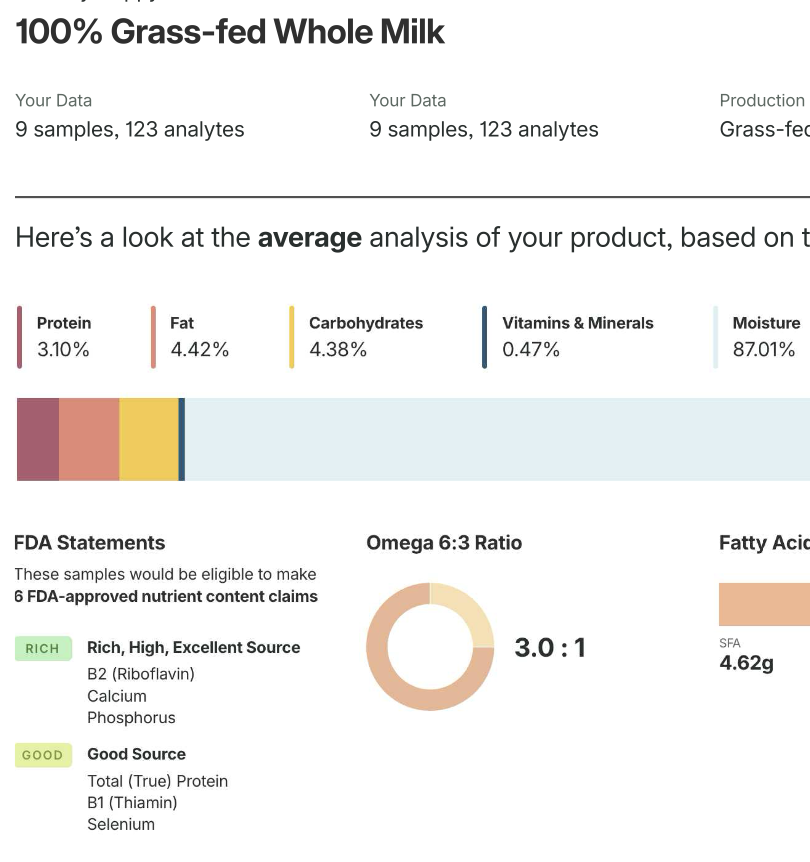
As momentum builds around nutrient dense‑ food, ROA’s partnership with Edacious Food Labs becomes even more significant. Edacious is rapidly advancing nutrient density‑ testing, helping quantify how regenerative organic practices translate into measurable nutritional benefits.
Their work illuminates:
- how soil biology influences nutrient profiles
- how regenerative grazing affects amino acids, minerals, and fatty acids
- how whole‑food protein differs from industrial alternatives
For ROC™ producers, Edacious provides scientific clarity that validates what they see daily on their land: healthy soil produces healthy food.
Why Regenerative Organic Matters Now More Than Ever
The Guidelines acknowledge what many communities have known for years — that chronic disease and ultra-processed diets represent‑ major national challenges.
ROC™ offers a grounded, proven response:
- Food grown in living soil
- Food free of synthetic chemicals
- Food that builds climate resilience
- Food shaped by biodiversity
- Food that supports farmers, workers, animals, and communities
- Food that nourishes deeply, even in small portions
Real food isn’t nostalgic.
It’s necessary.
And ROC™ certification ensures it remains truly real.
At ROA, we see the new Guidelines, GLP‑1 behavioral shifts, and the work of partners like Edacious as converging signs of something important:
Consumers are reconsidering what nourishment actually means.
ROC™ producers are already living that answer.
Because nourishment can’t be fabricated.
It can’t be simulated.
It must be grown, stewarded, and shaped through soil, seasons, and care.
The Guidelines are moving in the right direction.
Edacious is strengthening the science.
Consumers — including GLP1 users — are seeking ‑nutrient dense‑, real food.
And ROC™ farmers and ranchers are already doing the work, every day.
Real Food. Real Land. Real Standards.
That’s ROC™, and That’s Everybody’s Bread & Butter.